
2026-09-09 · Victor Reinhart
Seasonal Checklist For Preventing HVAC Breakdowns
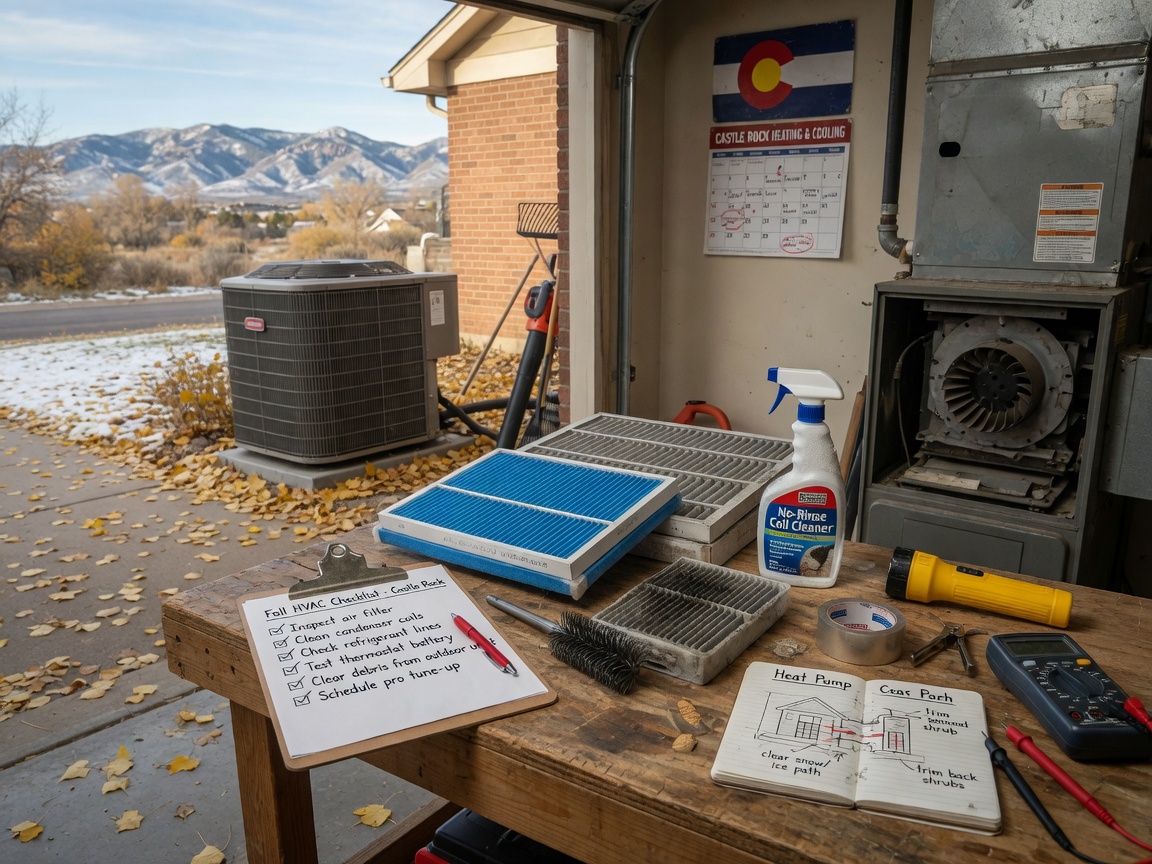
A seasonal checklist prevents most HVAC breakdowns in Castle Rock by catching dust buildup from the semi-arid climate before it stresses components and by preparing systems for the shift to snowy winters that hit Douglas County each year. Homes in The Meadows and Founders Village often feature systems 8–15 years old that need attention to filters, coils, and thermostats as temperatures swing from sunny 80-degree days to sub-freezing nights. Following the steps below keeps equipment running through peak loads without emergency calls.
Spring Preparation for AC Systems
Spring in Castle Rock brings rising temperatures and increased pollen that quickly coats outdoor condenser coils in neighborhoods like Downtown Castle Rock. Homeowners should replace 1-inch filters every 30–45 days during this transition to maintain airflow and avoid the restricted circulation that leads to frozen evaporator coils. Inspect the area around the outdoor unit for debris from winter storms and trim vegetation back at least 2 feet to allow proper heat exchange. In Douglas County the semi-arid air carries fine dust that settles inside ductwork, so a professional cleaning reduces strain on the blower motor. Link this step to altitude considerations that already lower efficiency by 3–5 percent at Castle Rock's elevation. Scheduling these tasks before June prevents the short-cycling that occurs once afternoon highs reach the mid-80s.
Summer Cooling Reliability Checks
Summer in Parker and Highlands Ranch pushes systems to run 10–12 hours daily under intense sun, making mid-season inspections essential for Castle Rock residents. Check refrigerant lines for insulation damage that allows heat gain and raises compressor workload. Listen for unusual rattling at the outdoor unit, which often signals loose fan blades after spring winds. Verify that condensate drains remain clear so standing water does not trigger safety switches during humid spells that occasionally follow monsoonal moisture. AC Maintenance addresses these items before they cause mid-July failures. Homes in Lone Tree with south-facing exposures see even higher run times, so confirming proper thermostat calibration prevents unnecessary wear on contactors and capacitors rated for 8–12 years of service.
Fall Furnace Readiness Steps
Fall brings the first cold fronts to Douglas County, and Castle Rock's sudden temperature drops test furnaces that sat idle through summer. Replace filters again and vacuum return-air grilles to remove accumulated dust before heating season begins. Test the igniter and flame sensor on gas units, as carbon buildup from low-humidity winters can cause lockouts within the first week of use. Ensure supply vents remain unobstructed by furniture so heat distributes evenly in two-story homes common in Founders Village. Heating Maintenance catches cracked heat exchangers that develop from repeated expansion cycles in dry air. How Castle Rock Altitude Impacts HVAC Efficiency explains why combustion settings must be verified at this elevation to maintain safe operation and avoid short cycling.
Winter Storm Protection Measures
Winter storms dump snow on Castle Rock and can bury outdoor units serving homes in The Meadows, cutting off airflow and forcing systems into defrost mode repeatedly. Clear snow from heat pump coils after each event and check that intake and exhaust pipes on high-efficiency furnaces remain free of ice. Keep a spare filter on hand because indoor air becomes drier and carries more particulates when windows stay closed for weeks. Common Furnace Issues During Castle Rock Cold Snaps details how low temperatures increase call volume for no-heat situations. Furnace Repair becomes necessary when limit switches trip from restricted airflow caused by neglected fall maintenance. These steps keep systems operational through the longest cold periods without relying on emergency service.
Year-Round Monitoring Practices
Beyond seasonal tasks, Castle Rock residents benefit from monthly visual checks of equipment condition and listening for changes in normal operating sounds. Track utility bills for unexplained spikes that indicate declining efficiency before complete failure occurs. In semi-arid conditions, indoor humidity often drops below 30 percent, so adding a whole-home humidifier reduces static and wood-floor stress while easing furnace workload. Document filter changes and service dates so patterns emerge over the 10–15 year lifespan typical for local installations. When issues appear outside these checklists, 24/7 emergency HVAC repair remains available at 333 Perry St, 3rd Floor, Ste 320, Castle Rock, CO 80104.