
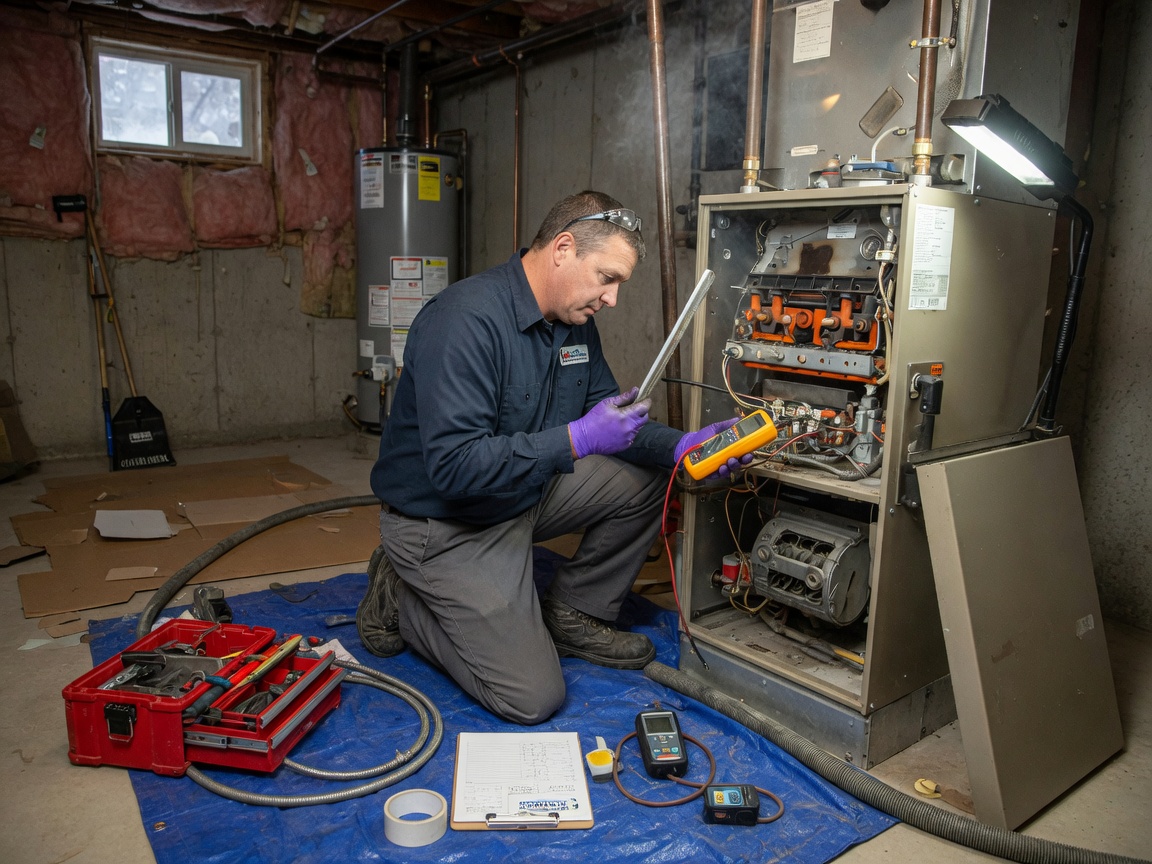
Castle Rock’s semi-arid climate brings long sunny stretches followed by sudden heavy snow, forcing furnaces to cycle hard during cold snaps. Homes in The Meadows and Founders Village often have mid-2000s construction with single-stage units that struggle when overnight lows drop below freezing after a mild day. Dry air also accelerates dust buildup on burners and heat exchangers, shortening component life compared with more humid Front Range cities.
Downtown Castle Rock contains a mix of older ranch homes and newer infill where original furnaces may still be in place. These systems frequently develop cracked heat exchangers or weak inducer motors after years of pulling air through construction dust from nearby Douglas County Fairgrounds events. Technicians must check for proper combustion air and venting clearances that can be compromised by tight insulation retrofits common in the area.
Parker, Highlands Ranch, and Lone Tree homeowners often call after their systems short-cycle during the first real cold front of the season. The combination of high altitude and low humidity changes flame characteristics, so gas pressure and orifice sizing must be verified on every repair rather than assumed from manufacturer defaults.
Rock Park and Castle Rock Outlets area properties sit on sloped lots that can affect condensate drainage on high-efficiency models. Frozen drain lines are a recurring winter issue that leads to pressure switch failures if not addressed during the initial service call.
Technician insight
In Castle Rock, the thing that catches most people out with Furnace Repair is how quickly dust from our dry winters clogs the inducer and burners on systems in The Meadows and Founders Village. Homeowners often skip filter changes during shoulder seasons, then the first snowstorm overloads the motor and trips the pressure switch.
Frozen Drain Line in The Meadows
A two-stage furnace in a 2008 home stopped mid-cycle during an early December cold snap. Inspection showed the condensate drain had frozen where it ran across an uninsulated crawl-space section. We cleared the line, added insulation, and restored heat the same afternoon without replacing any major components.
Furnace Repair Services We Offer
✓Gas Valve Replacement
Replaces faulty gas valves that prevent reliable ignition on single-stage and two-stage furnaces common in The Meadows homes.
✓Igniter Replacement
Installs new hot-surface or spark igniters that fail from repeated cold starts during Castle Rock’s winter temperature swings.
✓Blower Motor Repair
Services or replaces blower motors strained by dust from dry semi-arid conditions and extended run times in Founders Village.
✓Heat Exchanger Inspection
Performs visual and pressure testing for cracks that develop faster in older Downtown Castle Rock systems exposed to high-altitude combustion.
✓Furnace Tune Up Service
Cleans burners, checks gas pressure, and verifies safety controls before winter to reduce emergency calls from Parker and Lone Tree customers.
✓Inducer Motor Replacement
Replaces failing inducer motors that cause pressure switch faults after pulling in dry, dusty air across Douglas County.
Furnace Repair Cost in Castle Rock, CO
| Service | Typical Range | What Affects It |
|---|---|---|
| Diagnostic Visit | $89–$150 | Higher after 8 p.m. or on holidays |
| Igniter Replacement | $180–$320 | Depends on model and access in older homes |
| Blower Motor Replacement | $350–$650 | Variable-speed motors cost more |
| Gas Valve Replacement | $275–$475 | Includes gas pressure adjustment for local supply |
| Inducer Motor Replacement | $320–$520 | Common on 80% and 90%+ furnaces in The Meadows |
Ranges are typical for Castle Rock, CO and confirmed with an exact written quote before any work starts.
How it works
- 1
Initial Safety Check
Technician verifies gas shutoff, electrical disconnect, and carbon monoxide levels before touching the unit.
- 2
System Diagnosis
Runs the furnace through a full cycle while monitoring flame, pressure switches, and temperature rise specific to Castle Rock altitude.
- 3
Component Repair or Replacement
Replaces or repairs the diagnosed part using manufacturer-approved components suited to local fuel supply variations.
- 4
Post-Repair Testing
Confirms proper operation, checks for gas leaks, and verifies condensate drainage on high-efficiency models.
- 5
Homeowner Walkthrough
Explains what failed, shows the old part when possible, and provides maintenance steps for the dry winter climate.
Pricing
Upfront quotes given before any repair work begins; after-hours emergency rates apply outside standard hours.