
2026-09-09 · Victor Reinhart
Common Furnace Issues During Castle Rock Cold Snaps
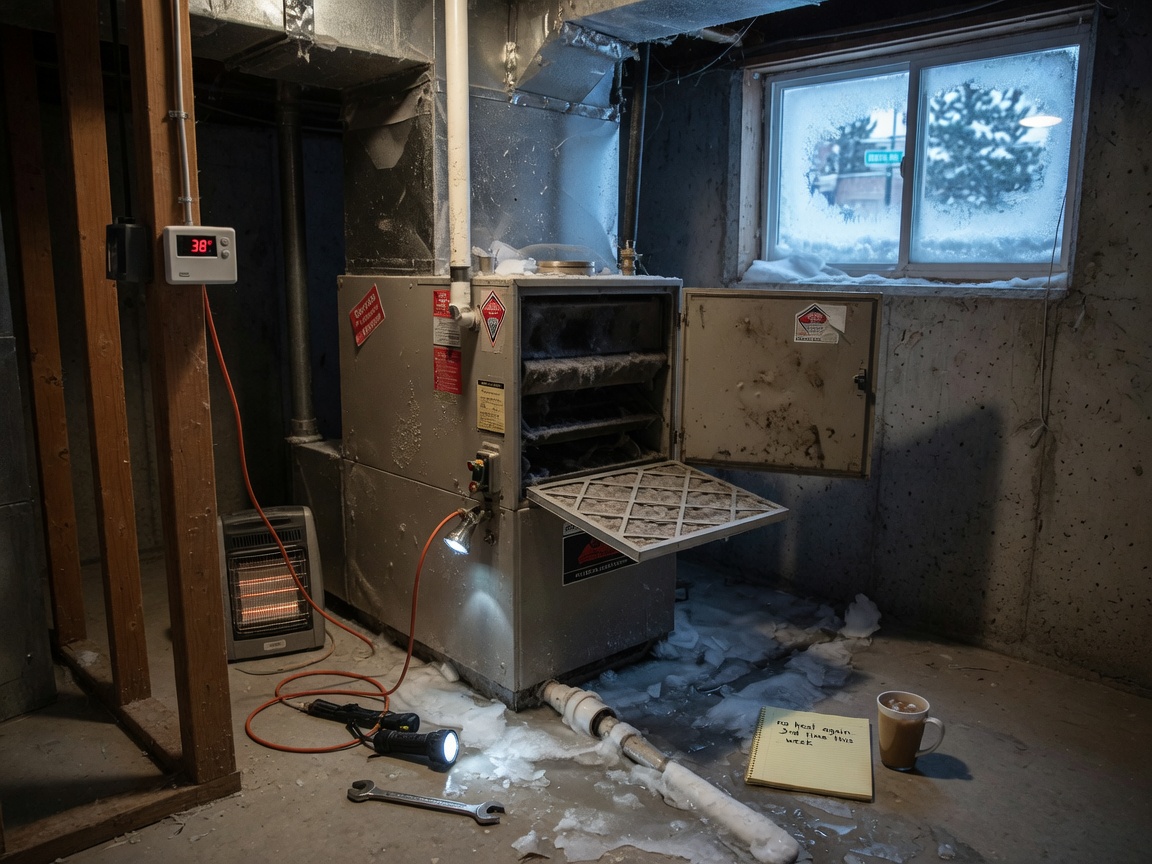
Castle Rock furnaces often fail at the ignition sensor or hot surface igniter when overnight lows plunge below freezing after sunny days, because the semi-arid climate produces rapid temperature swings that stress metal components and wiring in homes built from the 1990s onward in Founders Village and The Meadows.
Ignition Sensor Failures During Temperature Swings
Rapid drops from daytime sun to nighttime snow create condensation inside the furnace cabinet that corrodes the flame sensor rod. In Douglas County homes, this shows up as short cycling where the unit tries to start three or four times before locking out. Technicians see the pattern most often in units eight to twelve years old because the sensor accumulates oxidation faster at 6,000 feet elevation. Checking the sensor with a multimeter and cleaning it with emery cloth restores operation in most cases, yet repeated cold snaps can crack the porcelain insulator and require full replacement. Homeowners notice the furnace running for only a few minutes before the thermostat resets the sequence.
Blower Motor Strain From Dry Air and Dust
Semi-arid conditions in Castle Rock push fine soil particles through return vents, coating the blower wheel and raising amp draw on the motor. During a cold snap the motor works harder to push air through restricted passages, leading to overheating and tripped thermal protectors. This issue appears frequently in The Meadows where newer homes have tighter envelopes that trap more airborne dust. A motor drawing over 80 percent of its rated amps needs capacitor testing and wheel cleaning before the next storm arrives. Neglecting the restriction can burn out the windings and force an unplanned replacement mid-winter.
Thermostat and Control Board Glitches in Snowy Conditions
Sudden humidity changes from melting snow on roofs affect low-voltage wiring and cause erratic readings on older thermostats. In Downtown Castle Rock homes with original wiring, the control board may interpret a 2-degree error as a fault and shut down the gas valve. Swapping to a thermostat installation with outdoor temperature compensation prevents the misreads. Control boards also suffer from voltage spikes when backup generators kick on during outages common after heavy snow. Keeping spare fuses and verifying 24-volt output during annual heating maintenance catches these failures before a cold snap hits.
Filter and Airflow Restrictions Amplified by Altitude
Castle Rock altitude reduces air density, so a partially clogged filter drops airflow more sharply than at sea level. Homeowners in Founders Village often wait too long between changes because sunny days keep the house feeling comfortable until the furnace must run continuously. A 1-inch filter loaded with dust can cut capacity by 20 percent, forcing the heat exchanger to overheat and trip the limit switch. Upgrading to a 4-inch media filter and changing it every six weeks during winter months maintains proper static pressure. The same principle applies when HVAC duct cleaning removes construction debris left from nearby developments in Parker and Lone Tree.
Review the seasonal checklist for preventing HVAC breakdowns and the effects of local altitude on system performance in the related article How Castle Rock Altitude Impacts HVAC Efficiency. When a unit stops during a cold snap, furnace repair technicians familiar with Douglas County conditions can isolate the exact component without replacing the entire system.